Getting Started
 Getting Started
 Project Walkthrough
 Manage Account
 All About Credits
Search & Prompt
 Search
 Filters vs Criteria
 FiltersCriteria
 Insights
 Talent Rediscovery
 Network SourcingResearch SignalsProfile View
 Sharing Searches
 Search Library
 Tips & Tricks
Agents
 Juicebox Agents [Legacy]Juicebox Agents
Shortlist
 Shortlist Profiles
 Profile Status
 Smart Report
 Request a Review
Sequences
 Sequences
 Add Profiles
 Sequence Tracking
 Analytics
 Maximize Replies
 Contact Data
Contacts
 Contacts Page
Exports & Integrations
 Exports
 ATS IntegrationsEmail Integrations
Organization
 Projects
 Hiding Profiles
 Hiring Managers
 Data Sources
 DNC
Support
 Help Center
 Contact Support
Sequence Tracking
Track profiles as they go through your sequence and analyze your response rates.
Introduction
Email sequences have powerful tracking built in. Use your sequence activity to identify successful campaigns and promising strategies. This guide will cover the detailed sequence view, as well as our analytics features built in.
Sequence Details
To view the details on an email sequence, simply click the sequence on the Email Sequences tab. You will then open the sequence tracking view.

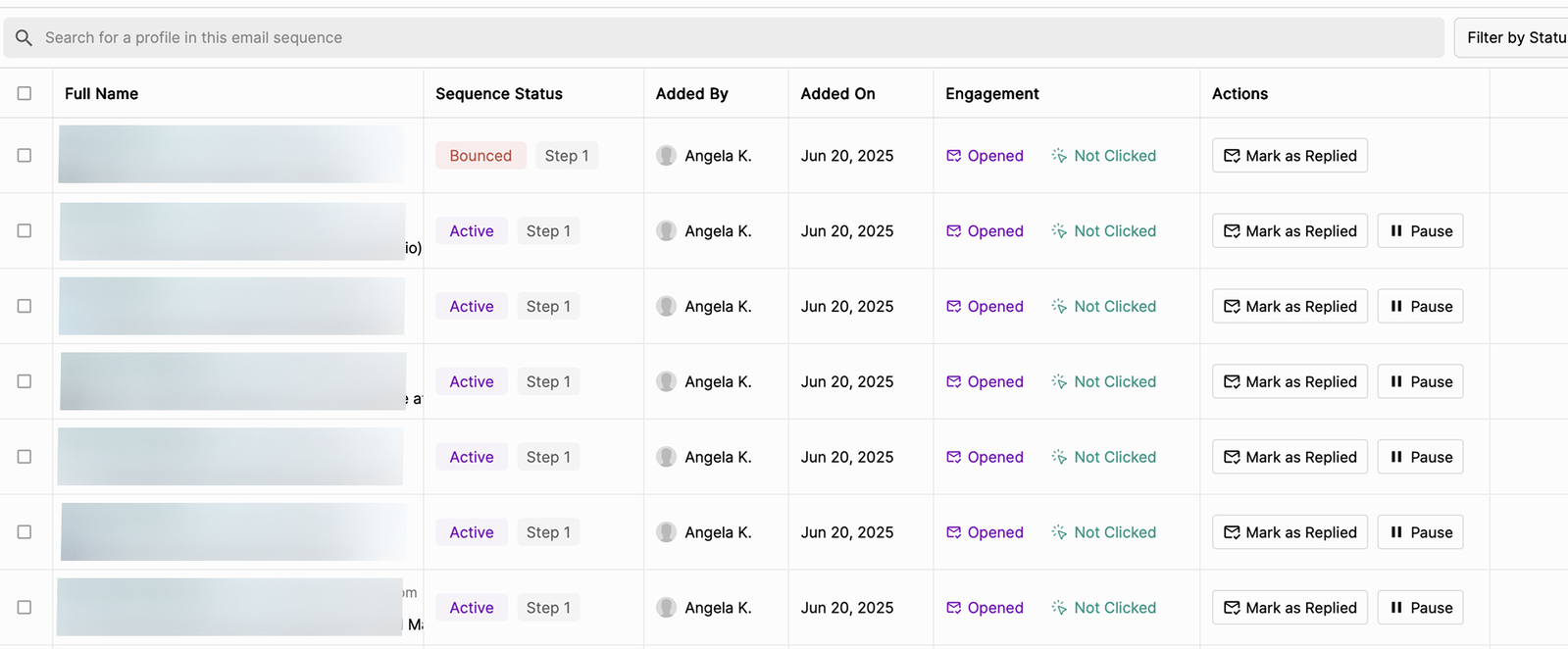
The view includes:
- A list of all profiles added into the sequence
- Their respective statuses (active, cancelled, unsubscribed, etc.)
- Attribution data
- Engagement data (open rate, click rate)
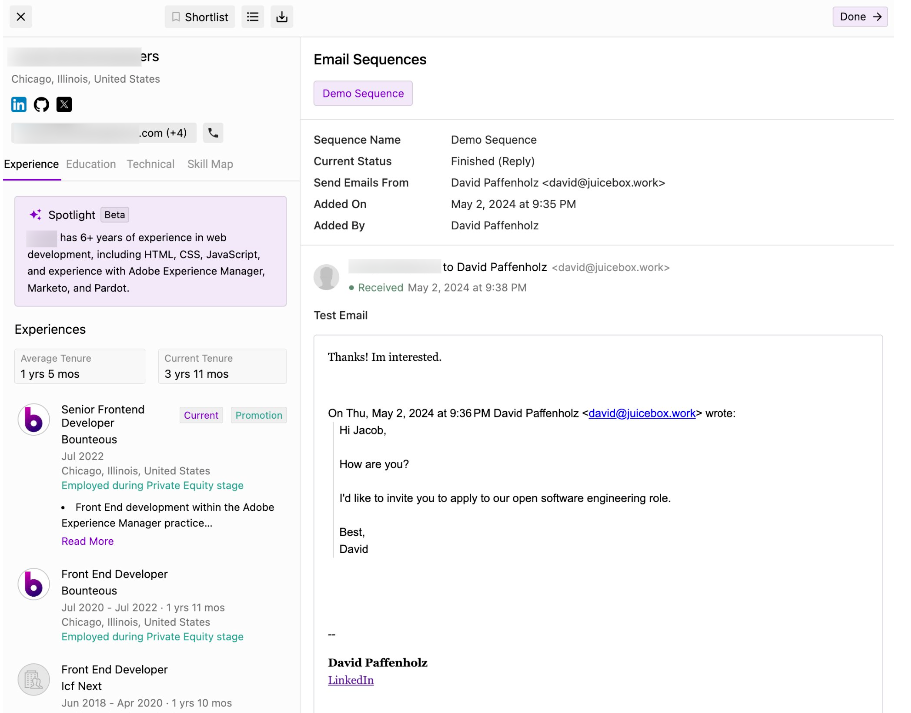
You can click into any name to open the detailed profile view, showing you the specific email that was sent to the candidate.
Labeling Profile Responses
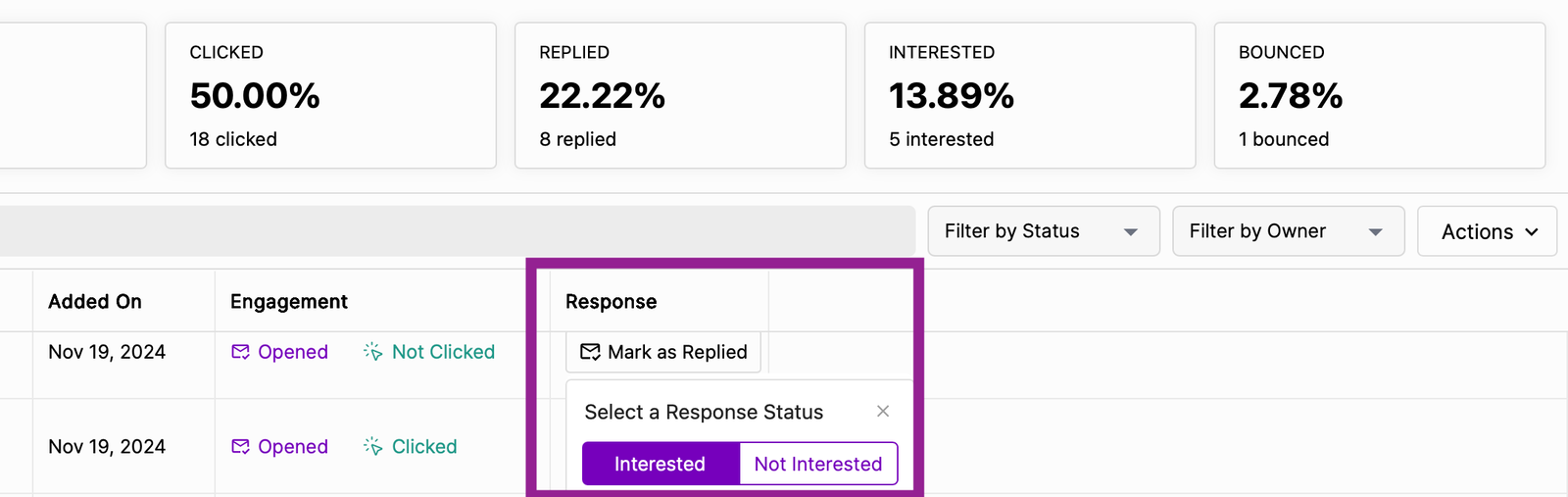
You can label email replies directly within the Sequences dashboard as Interested or Not Interested. When a recipient replies to your email, select Mark as Replied, then choose their response status. These labels sync automatically to the Shortlist page, allowing you to filter and review profiles based on interest.
Sequence Analytics
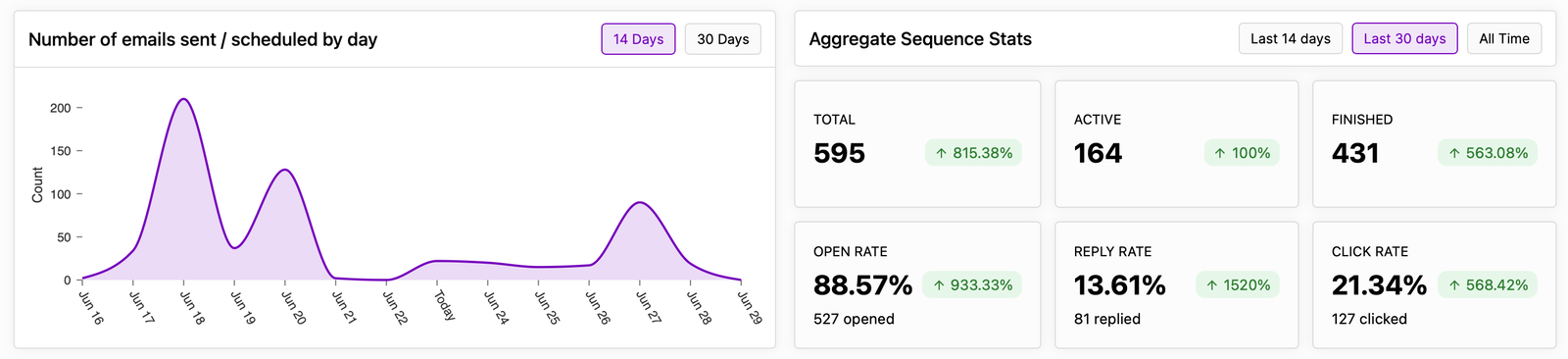
With each sequence, you receive six different data points:
- Total number of profiles in sequence
- Active
- Finished
- Replied
- Opened
- Bounced
When hovering over the figures, corresponding percentages are shown.
← Previous
Next →